
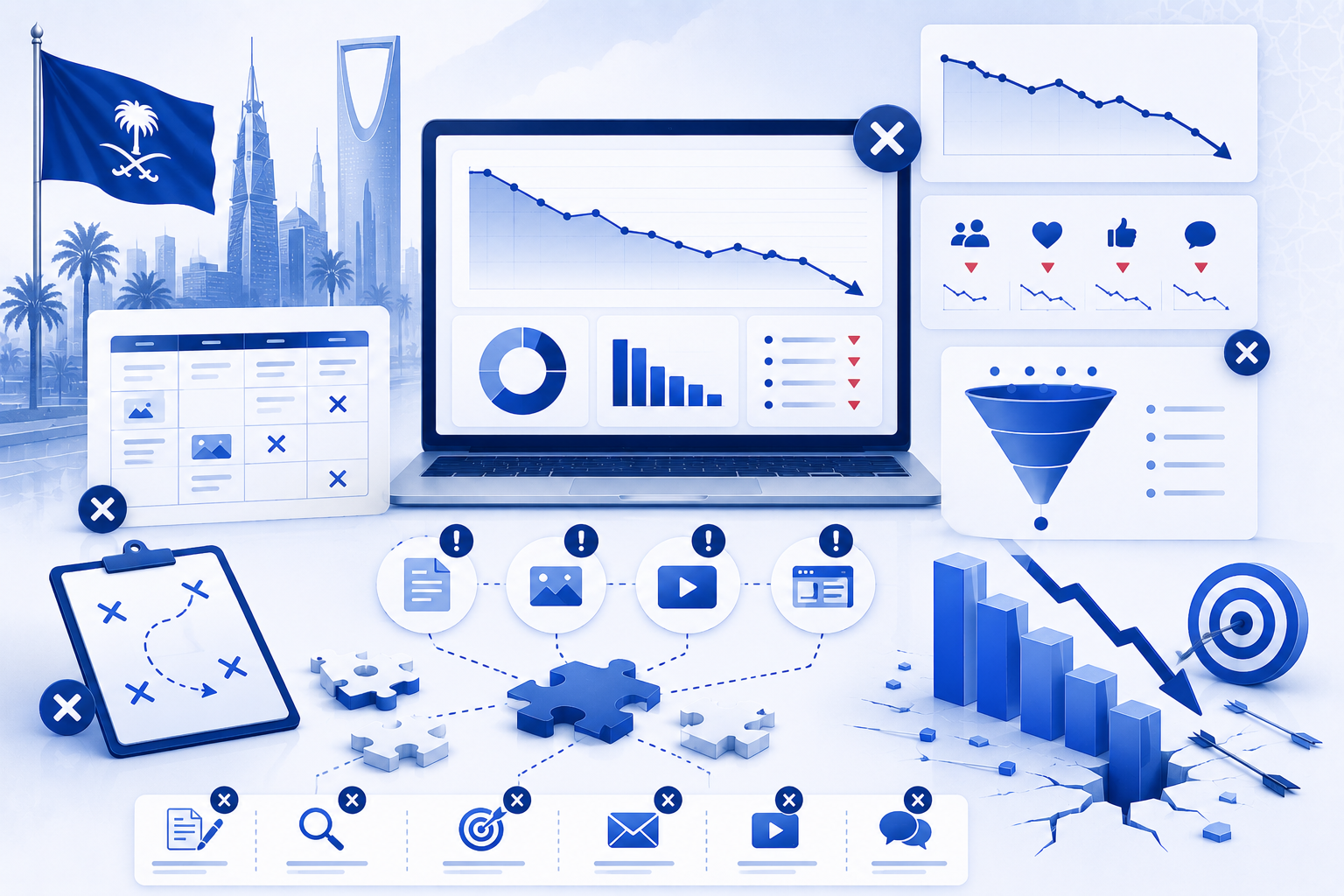
10 Content Marketing Mistakes That Hurt Your ROI
Content marketing has become one of the most effective ways for businesses to attract potential customers, strengthen brand credibility, and support long-term growth. Yet despite significant investments in content creation, many organizations struggle to generate meaningful returns from their efforts. The issue often isn’t the lack of content. Instead, it stems from strategic mistakes that prevent businesses from turning their content initiatives into measurable business outcomes. Publishing blog posts regularly does not automatically lead to increased revenue, stronger customer relationships, or higher conversion rates. To achieve sustainable results, content must be aligned with audience needs, business objectives, and performance measurement. In this guide, we’ll explore the most common content marketing mistakes that reduce ROI and explain how businesses can avoid them to maximize the value of their content investments.Why Do Some Content Marketing Strategies Fail?
Many companies maintain active blogs, produce social media content, and invest heavily in content production. However, they often fail to connect these activities to broader business goals. Without a clear strategy, content becomes a routine publishing exercise rather than a growth driver. Successful content marketing requires more than consistency. It demands an understanding of customer behavior, alignment with business priorities, and a commitment to ongoing optimization.Mistake #1: Creating Content Without Clear Objectives
One of the most common content marketing mistakes is producing content without defining what success actually looks like. Businesses should identify whether their primary goal is to increase brand awareness, generate qualified leads, improve search visibility, nurture prospects, or support sales initiatives. Without measurable objectives, it becomes difficult to evaluate performance or determine whether content efforts are delivering value. Every piece of content should contribute toward a specific business outcome.Mistake #2: Ignoring Search Intent
Many marketers focus heavily on keywords while overlooking the intent behind user searches. However, understanding why someone performs a search is just as important as understanding what they search for. For example, a user searching for “what is content marketing” is likely seeking educational information, whereas someone searching for “content marketing agency” may be closer to making a purchasing decision. Content that fails to align with search intent often struggles to engage users or generate conversions. By addressing audience needs at different stages of the buyer journey, businesses can create more relevant and effective content experiences.Mistake #3: Prioritizing Quantity Over Quality
Some organizations believe that publishing more content automatically leads to better results. In reality, low-quality content can damage brand credibility and fail to deliver meaningful outcomes. High-performing content focuses on providing genuine value, answering important questions, and helping audiences make informed decisions. Publishing fewer pieces with greater depth and relevance often produces stronger long-term returns than maintaining a high-volume publishing schedule without a clear quality standard. Trust is built through usefulness, not frequency alone.Mistake #4: Failing to Understand Your Target Audience
Creating effective content begins with understanding who your audience is and what challenges they face. Yet many businesses rely on assumptions rather than actual customer insights when developing their content strategies. As a result, they publish content that fails to address real concerns, answer important questions, or support decision-making processes. Audience expectations vary significantly across industries, regions, and stages of the buyer journey. What resonates with one segment may be completely irrelevant to another. Businesses should continuously gather insights through customer conversations, search behavior analysis, surveys, and performance data to better understand audience needs. The more relevant your content is to your audience’s priorities, the more likely it is to generate meaningful engagement and business results.Mistake #5: Missing or Weak Calls-to-Action
Even highly informative content can underperform if readers are not guided toward a logical next step. After consuming valuable information, users should clearly understand what action they can take next. Examples of effective calls-to-action include:- Requesting a consultation.
- Downloading a resource or guide.
- Contacting the business directly.
- Scheduling a meeting.
- Subscribing to a newsletter.

Data-driven content strategies outperform random publishing efforts.
Mistake #6: Neglecting Performance Measurement
Publishing content without evaluating its effectiveness is one of the fastest ways to waste time and resources. Businesses should regularly assess whether their content contributes to strategic objectives and delivers measurable value. Important metrics may include:- Qualified leads generated.
- Conversion rates.
- Organic traffic growth.
- Time spent on page.
- Click-through rates.
- Revenue influenced by content initiatives.

Tracking performance metrics helps optimize content strategies and improve ROI.
Mistake #7: Ignoring Existing Content Assets
Many businesses focus exclusively on creating new content while overlooking opportunities to improve existing materials. However, previously published content often represents untapped potential. Updating articles with fresh insights, revised statistics, stronger internal links, and improved user experiences can significantly enhance performance. In many cases, optimizing existing content delivers faster results than starting from scratch. Content should be treated as a long-term asset that evolves alongside changing customer needs and industry developments.Mistake #8: Relying on a Single Distribution Channel
Some organizations depend entirely on one platform to distribute their content. Whether that platform is organic search, social media, or email marketing, overreliance creates unnecessary risk. Algorithms change, audience preferences evolve, and market conditions shift over time. To reduce vulnerability and expand reach, businesses should diversify their distribution strategies across multiple channels. Examples include:- Search engine optimization.
- Email marketing.
- LinkedIn.
- X (formerly Twitter).
- Instagram.
- Paid promotion when appropriate.
Mistake #9: Overlooking SEO Best Practices
Some businesses invest heavily in producing high-quality content but fail to optimize it for search engines. As a result, valuable resources remain difficult for potential customers to discover. Even exceptional content may struggle to generate meaningful results if it lacks the foundational elements that support visibility in search. Search engine optimization is not about stuffing articles with keywords. Instead, it focuses on creating content that aligns with user intent while helping search engines understand its relevance and value. Important SEO considerations include:- Targeting appropriate keywords and topics.
- Understanding search intent.
- Using clear heading structures.
- Optimizing title tags and meta descriptions.
- Strengthening internal linking strategies.
- Improving page experience and website performance.
Mistake #10: Failing to Repurpose Existing Content
Many organizations treat each piece of content as a one-time initiative, moving on to the next project without maximizing the value of existing assets. This approach often leads to unnecessary workload and reduced returns on content investments. Repurposing content allows businesses to extend the lifespan of successful materials while reaching audiences through different formats and channels. For example, companies can transform:- Blog articles into social media posts.
- Comprehensive guides into email sequences.
- Webinars into short-form videos.
- Research findings into infographics.
- Frequently asked questions into interactive content experiences.
How to Avoid These Content Marketing Mistakes
While no content strategy is perfect, businesses can significantly improve their results by adopting a more intentional and data-driven approach. Start by establishing clear objectives that align with broader business goals. Invest time in understanding your audience’s needs, motivations, and decision-making processes. Focus on creating high-quality content designed to solve problems and deliver genuine value rather than publishing solely for the sake of consistency. Ensure that every content asset includes a logical next step that guides users toward meaningful actions. Regularly review performance data to identify opportunities for improvement, optimize underperforming assets, and refine future initiatives. Updating existing content and repurposing successful materials across multiple channels can also contribute significantly to stronger long-term outcomes. Above all, businesses should recognize that content marketing is a long-term investment requiring ongoing optimization and strategic alignment. Content marketing has the potential to become one of the most valuable drivers of sustainable business growth. However, its effectiveness depends heavily on the quality of execution. The mistakes outlined throughout this guide can limit performance, reduce conversion opportunities, and diminish the overall return generated from content initiatives. By avoiding these common pitfalls, businesses can improve audience engagement, strengthen search visibility, support revenue growth, and maximize the impact of their content investments. Ultimately, successful content marketing is not measured by the number of articles published or the volume of social media activity. It is measured by the value it creates for audiences and the results it delivers for the organization. At WIDE, we help businesses develop content strategies built around audience insights, SEO best practices, and measurable business outcomes. Our goal is to transform content from a marketing activity into a sustainable growth engine. If you’re ready to improve your content performance and generate stronger returns from your marketing efforts, now is the time to reassess your approach and build a strategy designed for long-term success.FAQ
What are the most common content marketing mistakes?
Some of the most common mistakes include publishing without clear objectives, ignoring search intent, neglecting performance measurement, prioritizing quantity over quality, and failing to update existing content.Does publishing more content lead to better results?
Not necessarily. High-quality content that addresses audience needs and aligns with business goals typically outperforms large volumes of low-value material.How can businesses determine whether their content strategy is successful?
Success can be evaluated by monitoring metrics such as qualified leads, conversion rates, organic traffic growth, audience engagement, and overall return on investment.Should businesses update older content?
Yes. Refreshing existing content with updated information, stronger optimization, and improved user experiences can enhance performance and maintain relevance over time.Can small businesses benefit from content marketing?
Absolutely. Content marketing enables small and medium-sized businesses to build credibility, attract qualified prospects, and compete more effectively through long-term value creation.Related Content Marketing Articles
Explore more articles about content strategy, performance measurement, ROI optimization, and turning content into a powerful business growth tool.