
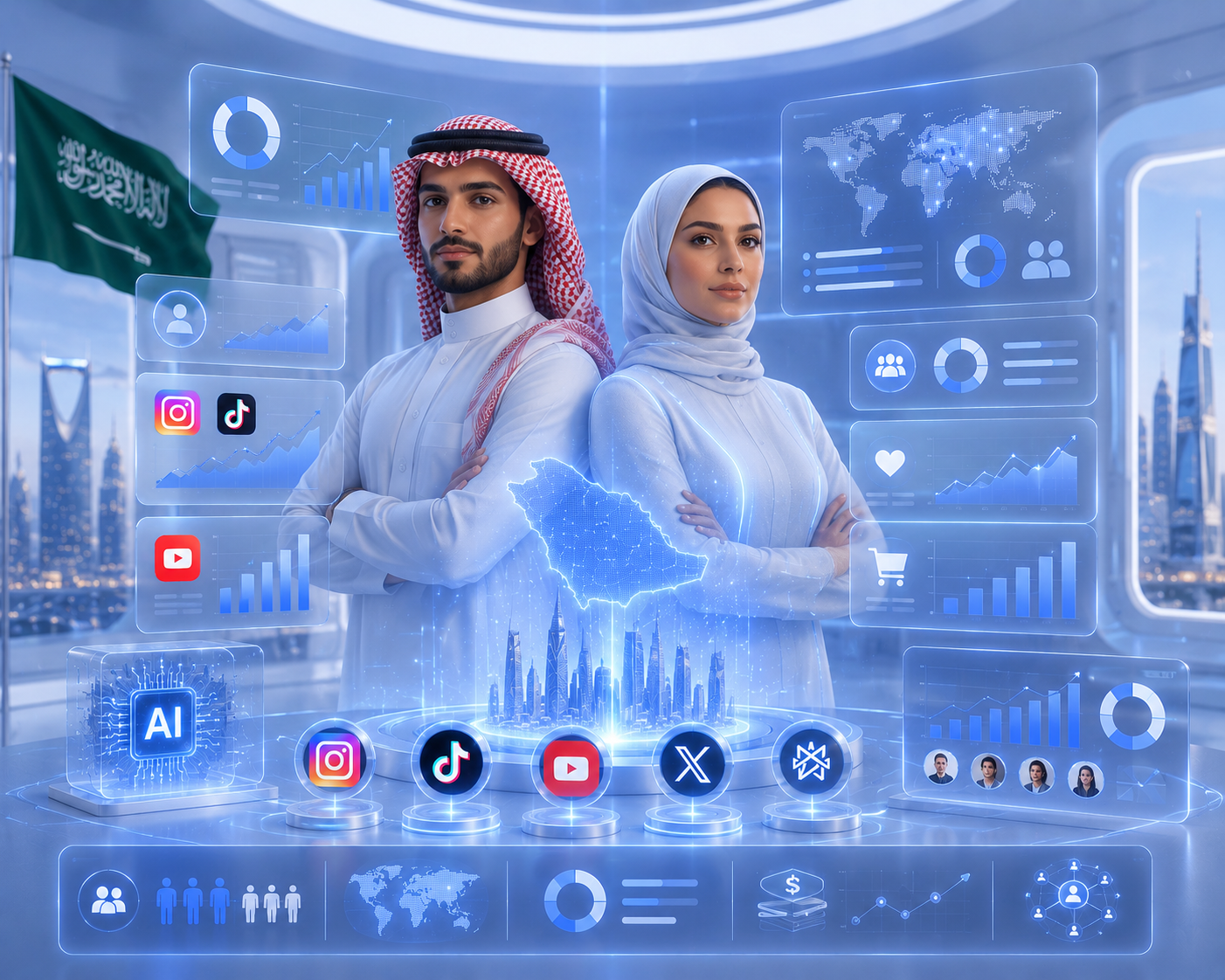
AI Digital Influencers: Are They Changing the Future of Marketing in Saudi Arabia?
In a world rapidly moving toward digital transformation, digital influencers have become one of the most powerful tools in modern marketing. Brands are no longer relying solely on traditional advertising methods. Instead, they are investing heavily in creators and influencers who can build trust, engagement, and stronger relationships with audiences. As social media usage continues to grow in Saudi Arabia, the role of digital influencers has expanded significantly. Today, businesses use influencers not only to increase awareness but also to drive sales, build communities, and improve customer loyalty. But what exactly is a digital influencer? How do they impact consumer behavior? And what role will artificial intelligence play in shaping the future of influencer marketing? Let’s explore.What Is a Digital Influencer?
A digital influencer is an individual who has built an audience on social media platforms and can influence the opinions, purchasing decisions, and behaviors of that audience. Influencers create content on platforms such as: • Instagram • TikTok • X (Twitter) • YouTube • Snapchat • LinkedIn Unlike traditional celebrities, digital influencers often build trust through direct interaction with followers and by sharing authentic experiences. This trust is what makes influencer marketing so powerful.Why Are Digital Influencers Important?
Consumers today trust people more than advertisements. When a trusted influencer recommends a product or service, audiences often perceive the recommendation as more authentic than a traditional advertisement. Digital influencers help businesses: • Increase brand awareness • Reach targeted audiences • Improve engagement rates • Generate leads and sales • Build stronger brand credibility In many industries, influencer recommendations can significantly impact purchasing decisions.
AI enables brands to analyze audience behavior and optimize influencer campaigns more effectively.
The Growth of Influencer Marketing in Saudi Arabia
Saudi Arabia is one of the fastest-growing digital markets in the Middle East. With millions of active social media users, influencer marketing has become a major part of many brands’ marketing strategies. Several factors contribute to this growth: • High social media adoption rates • Strong mobile usage • Young and digitally connected populations • Growing e-commerce activity • Increased demand for localized content As a result, businesses across sectors are partnering with influencers to connect with audiences more effectively.Types of Digital Influencers
Not all influencers are the same.Mega Influencers
Typically celebrities or public figures with millions of followers. Best for: • Brand awareness • Large-scale campaignsMacro Influencers
Usually have hundreds of thousands of followers. Best for: • Large audience reach • National campaignsMicro Influencers
Often have smaller but highly engaged audiences. Best for: • Niche targeting • Higher engagement rates • Local marketing campaignsNano Influencers
Influencers with highly specific communities. Best for: • Authentic recommendations • Community-focused marketing Many brands today prefer micro and nano influencers because they often generate stronger engagement and trust.How Influencers Affect Consumer Behavior
Influencers impact consumer decisions through several psychological mechanisms.Social Proof
People tend to follow the actions of others. When consumers see an influencer using a product, they often view that product as more trustworthy and desirable.Authority
Influencers are often seen as experts within their niches. This perceived expertise increases audience confidence in recommendations.Familiarity
Regular exposure to an influencer creates familiarity and emotional connection. This relationship often increases the likelihood of engagement and purchases.Community Influence
Followers frequently identify with influencer communities and adopt similar preferences and behaviors.Challenges in Influencer Marketing
Despite its benefits, influencer marketing comes with challenges. Businesses must carefully evaluate: • Audience quality • Fake followers • Engagement authenticity • Brand alignment • Campaign measurement Choosing the wrong influencer can reduce campaign effectiveness and negatively impact brand perception. Successful influencer marketing requires strategic planning and performance analysis.The Rise of AI in Influencer Marketing
Artificial intelligence is transforming the influencer marketing landscape. Brands now use AI tools to: • Analyze audience behavior • Identify ideal influencers • Predict campaign performance • Optimize content strategies • Automate reporting and analytics AI helps marketers make faster and more accurate decisions. Instead of relying solely on intuition, businesses can use data-driven insights to improve outcomes.AI-Powered Influencers
One of the most exciting developments is the emergence of AI-generated influencers. These virtual personalities are created using artificial intelligence and computer-generated imagery. AI influencers can: • Create content 24/7 • Maintain consistent brand messaging • Operate across multiple platforms • Scale more efficiently than human influencers As technology evolves, AI influencers may become an increasingly common part of marketing strategies worldwide.Measuring Influencer Marketing Success
One of the biggest mistakes businesses make is focusing only on follower counts. The true value of influencer marketing comes from measurable performance indicators. Important metrics include: • Engagement Rate • Reach and Impressions • Website Traffic • Conversion Rate • Cost Per Acquisition (CPA) • Return on Investment (ROI) Brands that track these metrics consistently can make smarter decisions and improve future campaigns.How to Choose the Right Influencer
Selecting the right influencer is often more important than selecting the biggest influencer. Before launching a campaign, consider:Audience Relevance
Does the influencer’s audience match your target market? A large audience means little if it does not align with your products or services.Engagement Quality
Look beyond likes. Evaluate: • Comments • Conversations • Audience interaction • Content shares High-quality engagement often produces better results than high follower counts.Content Quality
Review the influencer’s previous content. Ask: • Is the content professional? • Is it authentic? • Does it align with your brand values? Consistency and quality matter.Brand Fit
The influencer should naturally fit your brand image and messaging. Forced partnerships often feel inauthentic and may reduce campaign effectiveness.The Future of Influencer Marketing
The influencer marketing industry continues to evolve. Several trends are shaping the future:AI-Powered Personalization
Artificial intelligence is helping brands deliver more personalized content to specific audience segments. This improves engagement and conversion rates.Predictive Analytics
AI can analyze historical campaign data and predict future performance. This helps businesses reduce risks and improve campaign planning.Automated Campaign Management
Marketing automation tools can now assist with: • Influencer discovery • Campaign tracking • Performance reporting • Audience segmentation This reduces manual work and improves efficiency.Virtual Influencers
AI-generated influencers are becoming more sophisticated every year. Some virtual influencers already have millions of followers and work with global brands. While human influencers remain important, virtual influencers are likely to play a larger role in future marketing strategies.Digital Influencers and Business Growth
Successful influencer campaigns can support business growth in several ways. They help organizations: • Build stronger brand awareness • Increase customer trust • Improve engagement rates • Generate qualified leads • Increase online sales • Strengthen customer relationships When combined with AI-driven analytics and automation, influencer marketing becomes even more powerful.Best Practices for Businesses
If you want to succeed with influencer marketing, consider the following recommendations:Define Clear Goals
Before launching any campaign, identify what success looks like. Possible objectives include: • Awareness • Engagement • Lead Generation • SalesFocus on Long-Term Relationships
Building long-term partnerships with influencers often generates better results than one-time collaborations. Trust grows over time.Prioritize Authenticity
Audiences quickly recognize overly promotional content. Authentic storytelling usually performs better than aggressive advertising.Use Data to Make Decisions
Monitor campaign performance regularly. Use analytics tools to understand: • Audience behavior • Content performance • Conversion opportunities Data-driven decisions typically outperform assumptions.Common Influencer Marketing Mistakes
Many businesses struggle because they make avoidable mistakes. Examples include: • Choosing influencers based only on follower count • Ignoring engagement quality • Failing to define campaign goals • Not tracking performance metrics • Using influencers who do not fit the brand Avoiding these mistakes can dramatically improve campaign results.FAQ
Are digital influencers still effective?
Yes. Influencer marketing remains one of the most effective forms of digital marketing when executed strategically.Are AI influencers replacing human influencers?
Not entirely. AI influencers are growing in popularity, but human influencers continue to provide authenticity and emotional connection. The future will likely include both.Which type of influencer is best?
The answer depends on your goals. Micro and nano influencers often produce stronger engagement, while macro and mega influencers provide broader reach.How can businesses measure influencer ROI?
By tracking metrics such as: • Conversions • Revenue generated • Lead quality • Customer acquisition costsIs influencer marketing suitable for small businesses?
Absolutely. Small businesses can often achieve strong results by partnering with local or niche influencers.
Businesses are increasingly exploring AI influencers as scalable alternatives within modern marketing strategies.
Related AI Automation Articles
Explore more articles about artificial intelligence, automation, smart marketing systems, and digital transformation.
How AI Is Transforming Influencer Marketing in Saudi Arabia
AI Digital Influencers: The Future of Marketing?
AI Customer Service Automation and the Future of Smart Workplaces
How AI Marketing Automation Enhances Short-Form Content Performance
How AI Business Automation Helps Saudi Companies Reduce Costs and Increase Productivity
Smart Workplaces and Hybrid Work: How AI Is Changing the Future of Work in Saudi Arabia
Marketing Automation: How Businesses Use It to Generate Leads and Improve Performance
AI Trends in Saudi Arabia 2026: How Businesses Can Benefit
Discover the Top AI Trends in Saudi Arabia for 2026 and Learn How Your Business Can Stay Ahead of the Competition.
Human + AI Marketing Strategy: Why Businesses That Combine Artificial Intelligence with Human Expertise Achieve Better Marketing Results