

AI Marketing Automation: How Short-Form Content Drives Better Marketing Results
How AI Marketing Automation Enhances Short-Form Content Performance
Short-form content has become the foundation of modern digital marketing. The way people consume information has changed dramatically. Users no longer wait, read lengthy articles, or watch long videos before deciding whether to engage with content. Platforms such as TikTok, Instagram Reels, and Snapchat have transformed audience behavior and made short-form content the preferred format for communication. This shift is not temporary. It represents a fundamental change in how brands connect with consumers. Short-form content includes any content that can be consumed within seconds or less than a minute. It may be a short video, a concise post, an infographic, a visual story, or a quick educational clip. Success is no longer determined by length but by impact.What Is Short-Form Content and Why Does It Dominate Digital Marketing?
Modern consumers face an overwhelming amount of information every day. As attention spans continue to shrink, audiences increasingly favor content that delivers value quickly and clearly. Short-form content succeeds because it:- Captures attention immediately
- Is easy to consume
- Encourages sharing
- Works across multiple platforms
- Supports mobile-first user behavior
- Generates stronger engagement rates
Why Does Short-Form Content Perform So Well in Saudi Arabia?
Saudi Arabia has one of the most active social media populations in the region. Millions of users engage daily with platforms such as TikTok, Instagram, Snapchat, and X. Consumers regularly discover products, services, and brands through short videos and social content. Several factors contribute to the success of short-form content in the Saudi market:- High social media usage
- Mobile-first behavior
- Strong video consumption habits
- Growing digital commerce adoption
- Increased demand for quick and engaging content
How Do Social Media Platforms Measure Engagement?
Engagement remains one of the most important indicators of digital marketing success. While views and impressions provide visibility metrics, engagement reflects genuine audience interest. Different platforms measure engagement differently. Instagram and Facebook focus on:- Likes
- Comments
- Shares
- Saves
- Link clicks
- Watch time
- Completion rate
- Replays
- Shares
- User interactions
- Watch duration
- Retention rates
- Subscriber growth
- Reposts
- Replies
- Link clicks
- Profile visits
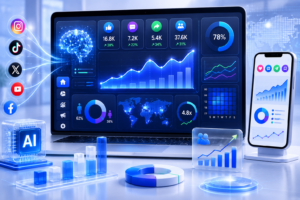
AI-driven analytics help marketers understand audience behavior and optimize content performance across social media platforms.
The Role of Artificial Intelligence in Short-Form Content Creation
Artificial intelligence has become a critical tool for modern marketing teams. Instead of relying entirely on manual processes, businesses can use AI to improve content quality, accelerate production, and gain deeper insights into audience behavior. AI can help marketers:- Generate content ideas
- Create captions and headlines
- Analyze audience preferences
- Identify trending topics
- Optimize publishing schedules
- Predict content performance
How AI Marketing Automation Improves Marketing Performance
AI marketing automation goes beyond content creation. Modern automation systems help businesses manage marketing operations more efficiently by connecting content, customer behavior, and performance data. AI marketing automation can:- Schedule content automatically
- Personalize customer experiences
- Optimize advertising campaigns
- Automate customer interactions
- Improve lead nurturing
- Analyze campaign performance in real time
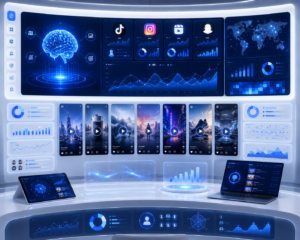
Marketing automation connects content, customer insights, and campaign optimization to improve engagement and conversions.
Understanding Customer Behavior Through Artificial Intelligence
One of the most valuable applications of AI is customer behavior analysis. AI systems can process large volumes of data to identify patterns that would be difficult for humans to detect manually. Businesses can use these insights to:- Understand customer interests
- Predict purchasing behavior
- Improve content relevance
- Increase conversion rates
- Enhance customer experiences
Real-World Examples of AI Marketing Automation
Many businesses are already using AI automation successfully. A local coffee shop may use AI-powered analytics to identify the most engaging video content and improve campaign performance. An e-commerce store can automate product recommendations based on browsing behavior. A professional services company may use AI to automate lead qualification and customer follow-ups. Telecommunications providers often use AI-driven customer support and personalized content strategies to increase engagement. These examples demonstrate how automation can transform marketing effectiveness across industries.How to Implement AI Marketing Automation in Your Business
Businesses looking to adopt AI marketing automation should begin with a clear strategy. Key steps include:- Define marketing objectives.
- Identify repetitive marketing tasks.
- Select appropriate AI tools.
- Integrate existing systems.
- Monitor performance continuously.
- Optimize campaigns using data insights.
How WIDE Helps Businesses Build Intelligent Marketing Systems
At WIDE, we help businesses implement practical AI automation solutions designed to improve efficiency and accelerate growth. Our services include:- AI marketing automation
- Customer behavior analysis
- CRM integration
- Workflow automation
- Content optimization
- Customer service automation
- Performance analytics
The Future of Short-Form Content and AI Marketing Automation
Short-form content will continue to play a central role in digital marketing. At the same time, artificial intelligence will become increasingly important in helping businesses understand audiences, personalize experiences, and automate repetitive processes. Organizations that combine short-form content with AI marketing automation will be better positioned to improve engagement, increase conversions, and achieve sustainable growth. The future of digital marketing belongs to businesses that embrace intelligent automation and data-driven decision making.Related AI Automation Articles
Explore more articles about artificial intelligence, automation, smart marketing systems, and digital transformation.
How AI Is Transforming Influencer Marketing in Saudi Arabia
AI Digital Influencers: The Future of Marketing?
AI Customer Service Automation and the Future of Smart Workplaces
How AI Marketing Automation Enhances Short-Form Content Performance
How AI Business Automation Helps Saudi Companies Reduce Costs and Increase Productivity
Smart Workplaces and Hybrid Work: How AI Is Changing the Future of Work in Saudi Arabia
AI Trends in Saudi Arabia 2026: How Businesses Can Benefit
Discover the Top AI Trends in Saudi Arabia for 2026 and Learn How Your Business Can Stay Ahead of the Competition.
Human + AI Marketing Strategy: Why Businesses That Combine Artificial Intelligence with Human Expertise Achieve Better Marketing Results