
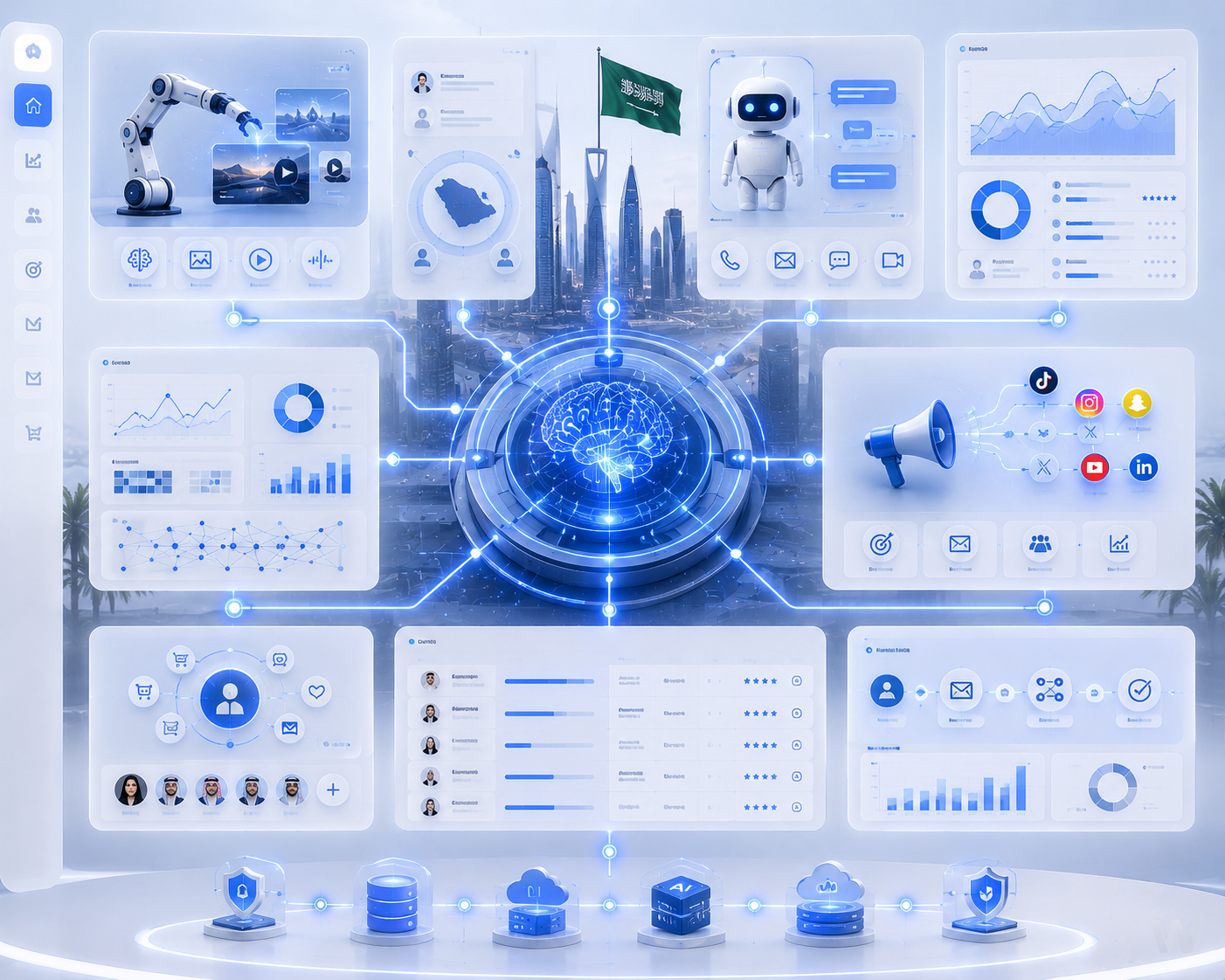
AI Business Automation: How Saudi Companies Reduce Costs and Increase Productivity
Businesses today operate in an environment defined by rapid technological change, increasing customer expectations, and intense competition. Organizations are constantly looking for ways to improve efficiency, reduce operating costs, and deliver better experiences without significantly increasing resources. In this environment, artificial intelligence has become one of the most transformative technologies available to modern businesses. What was once considered a futuristic innovation is now a practical business tool helping organizations automate operations, improve decision-making, and scale more effectively. AI business automation is no longer limited to large enterprises. Small and medium-sized businesses are increasingly adopting automation technologies to streamline workflows, improve customer service, enhance marketing performance, and optimize daily operations. Across Saudi Arabia, organizations are accelerating their digital transformation efforts in alignment with Vision 2030. As businesses invest in technology and innovation, AI automation is emerging as a key driver of operational efficiency and sustainable growth. Through intelligent automation, companies can eliminate repetitive tasks, reduce manual workloads, improve accuracy, and empower employees to focus on higher-value activities. At the same time, AI automation helps businesses better understand customer behavior, improve service delivery, and make data-driven decisions that support long-term success. In this article, we explore how AI business automation works, why Saudi companies are increasingly adopting intelligent automation systems, and how organizations can use AI to reduce costs, increase productivity, and create smarter business operations.What Is AI Business Automation?
AI business automation refers to the use of artificial intelligence technologies to automate repetitive processes, optimize workflows, and improve operational efficiency. Traditional automation systems typically rely on predefined rules and static workflows. While these systems can automate simple tasks, they often struggle when situations become more complex or require decision-making capabilities. Artificial intelligence introduces a new level of flexibility and intelligence. Modern AI systems can:- Analyze large amounts of data
- Recognize patterns
- Learn from previous interactions
- Predict outcomes
- Make recommendations
- Automate decision-based processes
Why Are Saudi Businesses Investing in AI Automation?
Saudi Arabia is experiencing one of the fastest digital transformation movements in the region. Government initiatives, technological investments, and growing customer expectations are encouraging businesses to modernize operations and embrace innovation. Several factors are driving the adoption of AI automation.Rising Customer Expectations
Today’s customers expect immediate responses, personalized experiences, and seamless interactions across multiple channels. Businesses that fail to meet these expectations risk losing customers to more agile competitors. AI automation enables organizations to provide faster and more consistent experiences while maintaining service quality.Increased Operational Costs
As businesses grow, manual processes become increasingly expensive. Hiring additional staff to manage repetitive tasks often leads to higher operational costs without proportional productivity gains. Automation allows businesses to scale operations more efficiently.Competitive Pressure
Organizations across industries are adopting AI technologies to improve performance. Businesses that delay automation may struggle to compete with companies that operate faster and more efficiently.Data Growth
Every customer interaction, transaction, and website visit generates valuable data. AI systems help businesses analyze this information and transform it into actionable insights that support better decision-making. For these reasons, AI business automation is becoming a strategic priority for organizations across Saudi Arabia.How AI Automation Reduces Operational Costs
One of the strongest business cases for AI automation is cost reduction. Many organizations spend significant resources on repetitive administrative activities that provide limited strategic value. Examples include:- Data entry
- Report generation
- Appointment scheduling
- Lead management
- Customer follow-ups
- Document processing
- Internal approvals
- Information routing
Reducing Human Error
Manual processes inevitably create mistakes. Data entry errors, missed follow-ups, inaccurate reports, and inconsistent customer communication can all lead to financial losses. AI systems perform repetitive tasks with greater consistency and accuracy, helping organizations reduce costly errors.Faster Process Execution
Automation dramatically reduces the time required to complete operational tasks. Processes that once required hours may now be completed within minutes. This improves responsiveness while reducing overhead costs.Better Resource Allocation
Instead of spending time on administrative activities, employees can focus on strategic work such as innovation, customer relationships, business development, and problem-solving. This shift creates greater value for both the organization and its customers.Improved Scalability
Traditional growth often requires hiring additional employees. Automation allows businesses to handle larger workloads without proportional increases in staffing costs. This creates a more sustainable growth model.How AI Improves Business Productivity
Productivity is not simply about doing more work. True productivity means completing meaningful work more efficiently while achieving better outcomes. AI automation enhances productivity in several ways. First, it removes repetitive tasks that consume employee time. Second, it accelerates access to information and insights. Third, it improves collaboration across departments by reducing delays and communication bottlenecks. Employees spend less time searching for information, updating records, and managing administrative activities. Instead, they can focus on strategic initiatives that contribute directly to business growth. Organizations often experience measurable productivity improvements after implementing automation solutions. Benefits may include:- Faster task completion
- Improved workflow efficiency
- Better collaboration
- Higher employee satisfaction
- Improved customer service
- Faster decision-making
- Increased output quality
AI Customer Service Automation
Customer service is one of the areas where artificial intelligence has delivered the most significant business impact. Traditionally, customer support teams handled inquiries manually through phone calls, emails, and messaging platforms. While effective, this approach often requires substantial resources and can create delays during periods of high demand. Today, AI-powered customer service automation allows businesses to respond faster, operate more efficiently, and deliver a better customer experience. Modern AI systems can:- Answer frequently asked questions
- Route inquiries automatically
- Provide product information
- Schedule appointments
- Process service requests
- Assist customers 24/7
- Escalate complex issues to human agents
AI-powered customer service automation improves response times and enhances customer experience.
Faster Response Times
One of the biggest customer frustrations is waiting for a response. AI-powered support systems can respond instantly regardless of time or location. This significantly improves customer satisfaction and reduces abandonment rates.Consistent Service Quality
Human responses naturally vary based on experience, workload, and individual communication styles. AI systems provide consistent and accurate information based on approved business knowledge and workflows.Lower Support Costs
By automating common inquiries, organizations can reduce the number of repetitive interactions handled by support staff. This allows teams to focus on higher-value customer issues while lowering operating expenses.Improved Customer Experience
Customers increasingly expect convenience and speed. AI automation enables businesses to meet these expectations while maintaining service quality and availability. For organizations seeking long-term efficiency, customer service automation often represents one of the highest-return automation investments.Marketing Automation and Customer Behavior Analysis
Marketing has become increasingly data-driven. Modern businesses generate enormous amounts of customer information through websites, advertising campaigns, social media platforms, CRM systems, and e-commerce stores. Without automation, analyzing and acting on this information becomes extremely difficult. AI marketing automation helps organizations transform customer data into actionable insights. Businesses can automate:- Lead nurturing
- Email marketing
- Audience segmentation
- Campaign optimization
- Content recommendations
- Behavioral targeting
- Customer journey personalization
Understanding Customer Behavior
One of the most powerful applications of artificial intelligence is customer behavior analysis. AI systems can identify patterns that humans might overlook. For example, businesses can discover:- Which content generates the highest engagement
- Which products attract the most interest
- Which audiences convert more frequently
- Which customer segments require different communication strategies
Personalizing Customer Experiences
Customers respond more positively when content and offers are relevant to their needs. AI automation enables businesses to personalize interactions based on:- Browsing history
- Purchase behavior
- Engagement patterns
- Customer preferences
- Previous interactions
Optimizing Marketing Performance
Artificial intelligence continuously analyzes campaign performance and identifies opportunities for improvement. This helps businesses:- Reduce wasted advertising spend
- Improve conversion rates
- Increase return on investment
- Improve audience targeting
- Enhance customer engagement
Artificial intelligence helps businesses analyze customer behavior and optimize marketing performance.
Integrating AI with CRM and Sales Systems
Many businesses already use CRM platforms to manage customer relationships and sales opportunities. However, CRM systems become significantly more valuable when combined with artificial intelligence. AI-powered CRM automation enables organizations to move beyond simple record keeping and create intelligent sales processes. Businesses can use AI to:- Prioritize leads
- Score opportunities
- Predict sales outcomes
- Recommend next actions
- Automate follow-ups
- Generate sales insights
- Improve forecasting accuracy
Lead Qualification Automation
Not all leads have the same value. AI systems can evaluate lead quality based on customer behavior, engagement levels, demographics, and purchase intent. This helps sales representatives prioritize their efforts and improve efficiency.Automated Follow-Ups
Following up with prospects consistently is essential for sales success. AI automation can send personalized follow-up messages based on customer actions and predefined workflows. This ensures opportunities are not lost due to delayed communication.Sales Forecasting
Artificial intelligence can analyze historical sales data and market trends to predict future performance. These insights help businesses plan resources more effectively and make better strategic decisions.Improving Conversion Rates
When businesses respond faster and engage customers at the right moment, conversion rates typically improve. AI helps organizations identify these opportunities and act on them automatically.Real-World AI Automation Examples in Saudi Businesses
AI automation is already transforming organizations across Saudi Arabia.E-Commerce Businesses
Online stores use artificial intelligence to:- Recommend products
- Personalize shopping experiences
- Recover abandoned carts
- Automate customer support
- Improve inventory management
Professional Service Companies
Consulting firms, agencies, and service providers automate:- Appointment scheduling
- Proposal generation
- Lead management
- Client communications
- Internal workflows
Healthcare Organizations
Healthcare providers use automation for:- Appointment management
- Patient reminders
- Customer communication
- Administrative processes
Educational Institutions
Schools and training organizations automate:- Student inquiries
- Registration processes
- Communication workflows
- Information management
How to Start Implementing AI Automation
Successful AI adoption begins with identifying business challenges rather than selecting technology first. Organizations should focus on areas where automation can deliver measurable value. A practical implementation process includes:- Defining clear business objectives.
- Identifying repetitive workflows.
- Evaluating automation opportunities.
- Selecting appropriate AI tools.
- Integrating existing systems.
- Training employees.
- Measuring results continuously.
- Optimizing workflows over time.
How WIDE Helps Businesses Build Intelligent Automation Systems
At WIDE, we help organizations implement practical AI automation solutions designed to improve efficiency, reduce costs, and accelerate growth. Our AI automation services include:- Customer service automation
- Marketing automation
- CRM integration
- Workflow automation
- Lead management automation
- Customer behavior analysis
- Business process optimization
- AI consulting and implementation
The Future of AI Business Automation
Artificial intelligence is rapidly becoming a core component of modern business operations. Organizations that embrace automation today are building a foundation for greater efficiency, agility, and competitiveness in the future. The goal of AI is not to replace people. Instead, it enables employees to focus on creativity, strategy, innovation, and relationship building while automation handles repetitive operational tasks. As technology continues to evolve, businesses that invest in AI automation will be better positioned to adapt, grow, and compete in increasingly digital markets. For Saudi companies pursuing digital transformation and sustainable growth, AI business automation represents one of the most valuable strategic investments available today.FAQ
What is AI business automation?
AI business automation uses artificial intelligence technologies to automate repetitive business processes, improve efficiency, and reduce operational costs.How does AI automation reduce business costs?
It reduces manual workloads, minimizes errors, improves workflow efficiency, and allows organizations to operate with greater productivity.Is AI automation suitable for small businesses?
Yes. Small businesses can use automation to improve customer service, increase productivity, and scale operations without significantly increasing costs.Can AI integrate with existing CRM systems?
Yes. Most modern AI solutions can integrate with CRM, sales, customer service, and marketing platforms to create more efficient workflows and better customer experiences.Related AI Automation Articles
Explore more articles about artificial intelligence, automation, smart marketing systems, and digital transformation.
How AI Is Transforming Influencer Marketing in Saudi Arabia
AI Digital Influencers: The Future of Marketing?
AI Customer Service Automation and the Future of Smart Workplaces
How AI Marketing Automation Enhances Short-Form Content Performance
How AI Business Automation Helps Saudi Companies Reduce Costs and Increase Productivity
Smart Workplaces and Hybrid Work: How AI Is Changing the Future of Work in Saudi Arabia
Marketing Automation: How Businesses Use It to Generate Leads and Improve Performance
AI Trends in Saudi Arabia 2026: How Businesses Can Benefit
Discover the Top AI Trends in Saudi Arabia for 2026 and Learn How Your Business Can Stay Ahead of the Competition.
Human + AI Marketing Strategy: Why Businesses That Combine Artificial Intelligence with Human Expertise Achieve Better Marketing Results