
Best SEO Tools for Businesses: A Complete Guide to Choosing the Right SEO Software in 2026
Search engine optimization has become one of the most valuable long-term digital marketing investments for businesses. Whether you’re running a corporate website, an e-commerce store, or a service-based company, ranking higher in Google can significantly increase qualified traffic and generate more leads without relying entirely on paid advertising.
However, achieving sustainable SEO success requires more than publishing content or adding keywords to your pages. Professional SEO teams rely on specialized tools to analyze website performance, identify technical issues, discover valuable keyword opportunities, monitor competitors, and continuously improve search visibility.
The challenge is that there are dozens of SEO platforms available today, each designed for different purposes. Some focus on keyword research, while others specialize in technical audits, backlink analysis, rank tracking, or user behavior analytics.
This guide explains the most important SEO tools used by professional agencies, how each tool contributes to a successful SEO strategy, and how businesses can choose the right combination of tools based on their goals and budget.
Why Every Business Needs Professional SEO Tools
Modern SEO is entirely data-driven.
Instead of making assumptions about what customers search for or why rankings change, SEO tools provide measurable insights that help businesses make informed decisions.
Professional SEO platforms help you:
- Discover high-value keywords.
- Understand search intent.
- Identify technical SEO problems.
- Monitor organic traffic growth.
- Analyze competitor strategies.
- Track keyword rankings.
- Improve website speed.
- Optimize user experience.
- Measure conversion performance.
Without accurate data, improving search visibility becomes largely a process of trial and error.
Types of SEO Tools Every Business Should Know
SEO software generally falls into several major categories, with each category solving a different challenge.
Keyword Research Tools
Keyword research forms the foundation of every successful SEO campaign.
These tools help businesses discover:
- Monthly search volume
- Keyword difficulty
- Search intent
- Related search terms
- Long-tail keyword opportunities
- Frequently asked questions
- Seasonal search trends
Popular keyword research platforms include:
- Google Keyword Planner
- Ahrefs Keywords Explorer
- Semrush Keyword Magic Tool
- Moz Keyword Explorer
Selecting the right keywords ensures your content reaches potential customers who are actively searching for your products or services rather than attracting irrelevant traffic.

Keyword research is the foundation of every successful SEO strategy.
Technical SEO Audit Tools
Even high-quality content struggles to rank if search engines encounter technical problems while crawling or indexing a website.
Technical SEO tools help identify issues such as:
- Broken links
- Duplicate pages
- Missing metadata
- Redirect chains
- Crawl errors
- Canonical issues
- Slow-loading pages
- XML Sitemap errors
- Robots.txt conflicts
Popular tools include:
- Screaming Frog SEO Spider
- Sitebulb
- Ahrefs Site Audit
- Semrush Site Audit
Regular technical audits prevent small website issues from becoming major ranking problems over time.
Website Performance & Analytics Tools
Publishing SEO improvements is only the beginning.
Businesses must continuously monitor performance to understand whether their strategy is delivering measurable results.
Key metrics include:
- Organic traffic
- Click-through rate (CTR)
- Average ranking position
- Indexed pages
- User engagement
- Conversion rate
- Bounce rate
- Landing page performance
The most widely used platforms are:
- Google Search Console
- Google Analytics 4
- Microsoft Clarity
These tools provide valuable insights into how visitors discover your website and interact with its content.
The Best SEO Tools Used by Professional Agencies
Experienced SEO agencies rarely rely on a single platform. Instead, they combine several specialized tools to build a complete SEO workflow that covers research, technical optimization, competitor analysis, performance tracking, and reporting.
Each tool plays a different role in improving search visibility and generating measurable business results.
Google Search Console
Google Search Console is the most important free SEO platform provided directly by Google.
It allows businesses to understand exactly how Google views their website while providing valuable performance data that cannot be found elsewhere.
With Google Search Console, you can:
- Monitor search impressions and clicks.
- Analyze keyword rankings.
- Submit XML sitemaps.
- Detect indexing problems.
- Identify Core Web Vitals issues.
- Review page experience reports.
- Discover pages with declining performance.
- Track mobile usability.
For businesses beginning their SEO journey, Search Console should always be the first tool to implement.
Ahrefs
Ahrefs is one of the industry’s leading SEO platforms and is widely used by agencies, consultants, and enterprise marketing teams.
Its strength lies in competitive analysis and backlink intelligence.
Key features include:
- Comprehensive backlink analysis.
- Keyword research.
- Competitor keyword discovery.
- Site auditing.
- Rank tracking.
- Content Gap analysis.
- Broken backlink opportunities.
- Internal linking reports.
Instead of guessing why competitors rank higher, Ahrefs provides actionable insights that help businesses uncover new opportunities and strengthen their SEO strategy.
Semrush
Semrush combines SEO, PPC, content marketing, and competitive intelligence into a single platform.
It is especially valuable for companies managing both organic and paid search campaigns.
Popular features include:
- Keyword Magic Tool
- Position Tracking
- Site Audit
- Backlink Analytics
- Domain Overview
- Organic Research
- Content Marketing Toolkit
- Local SEO Management
Businesses looking for an all-in-one digital marketing platform often choose Semrush because it supports multiple marketing channels from one dashboard.
Screaming Frog SEO Spider
Screaming Frog is considered one of the most powerful technical SEO crawlers available.
Rather than analyzing keywords, it crawls your website the same way search engines do and identifies technical problems that may prevent pages from ranking.
Common issues it detects include:
- Broken internal links.
- Duplicate title tags.
- Missing meta descriptions.
- Redirect loops.
- Canonical conflicts.
- Large image files.
- Thin content pages.
- Missing H1 headings.
- Crawl depth issues.
For websites with hundreds or thousands of pages, this software dramatically reduces the time required for technical audits.
Google Analytics 4 (GA4)
SEO is about more than attracting visitors.
The ultimate goal is generating qualified leads, sales, and business growth.
Google Analytics 4 helps businesses understand what happens after users arrive on the website.
Key reports include:
- User acquisition.
- Engagement.
- Landing page performance.
- Conversion tracking.
- Events.
- Customer journeys.
- Geographic reports.
- Device performance.
Combining GA4 with Search Console provides a much clearer picture of SEO performance than relying on rankings alone.
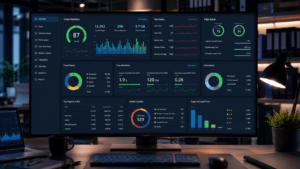
Technical SEO audits identify issues that impact search rankings.
SEO Tools That Improve User Experience
Search engines increasingly reward websites that provide exceptional user experiences.
Modern SEO is no longer limited to keywords and backlinks.
Several tools help businesses optimize usability, page speed, and visitor engagement.
Microsoft Clarity
Microsoft Clarity provides visual insights into user behavior through:
- Heatmaps
- Session recordings
- Scroll tracking
- Click analysis
- Dead-click detection
- Rage-click identification
Instead of relying solely on analytics reports, businesses can actually watch how visitors interact with each page and identify usability problems that reduce conversions.
Google PageSpeed Insights
Website speed directly influences both user satisfaction and search rankings.
Google PageSpeed Insights evaluates important performance metrics such as:
- Largest Contentful Paint (LCP)
- Interaction to Next Paint (INP)
- Cumulative Layout Shift (CLS)
- Mobile performance
- Desktop performance
The platform also provides detailed recommendations that help developers improve loading speed and Core Web Vitals scores.
Do SEO Tools Guarantee Higher Rankings?
The short answer is no.
SEO tools provide data—not results.
Many companies invest in expensive software subscriptions but fail to improve their rankings because they lack a clear SEO strategy.
Successful SEO requires combining professional tools with:
- Technical expertise.
- Strategic keyword targeting.
- High-quality content.
- Internal linking.
- Website architecture optimization.
- User experience improvements.
- Continuous performance monitoring.
Tools reveal opportunities, but experienced SEO professionals turn those opportunities into measurable business growth.
How to Choose the Right SEO Tools for Your Business
With dozens of SEO platforms available today, choosing the right software can feel overwhelming. The best approach is to select tools based on your business goals rather than trying to purchase every available platform.
Before investing in any SEO solution, consider the following questions:
- Do you primarily need keyword research?
- Are you trying to solve technical SEO issues?
- Do you want to analyze competitors?
- Is backlink analysis important for your industry?
- Do you need detailed reporting for clients or stakeholders?
- What is your monthly marketing budget?
- How large is your website?
Small businesses often achieve excellent results with Google Search Console, Google Analytics 4, and Microsoft Clarity. As websites grow and competition increases, premium platforms such as Ahrefs or Semrush become valuable additions to the SEO workflow.
The most effective strategy is building a toolset that matches your business objectives instead of paying for features you may never use.
How WIDE Agency Helps Businesses Get Better SEO Results
Professional SEO is not about using more tools—it is about using the right data to make better decisions.
At WIDE Agency, we combine advanced SEO platforms with years of practical experience to create strategies focused on measurable business growth.
Our SEO services include:
- Comprehensive SEO audits
- Technical SEO optimization
- Keyword research and search intent analysis
- Competitor analysis
- Website architecture optimization
- Content strategy development
- Topical Authority implementation
- Internal linking optimization
- Core Web Vitals improvements
- Ongoing SEO reporting and performance monitoring
Rather than focusing solely on rankings, we help businesses attract qualified traffic that converts into leads, inquiries, and long-term customers.
SEO tools have become essential for every modern business that wants to compete online. They provide valuable insights into website performance, keyword opportunities, technical issues, and competitor strategies.
However, software alone does not generate rankings.
The companies that consistently succeed in Google combine professional SEO tools with a structured optimization strategy, high-quality content, technical expertise, and continuous performance improvements.
Choosing the right tools is an important step—but knowing how to use them effectively is what creates sustainable growth.
Whether your goal is increasing organic traffic, generating qualified leads, or building long-term online visibility, investing in the right SEO strategy will always deliver greater value than relying on tools alone.
Frequently Asked Questions
What is the best SEO tool?
There is no single best SEO tool for every business. Google Search Console is essential for every website, while platforms like Ahrefs and Semrush provide advanced capabilities for keyword research, competitor analysis, backlink monitoring, and technical SEO.
Are free SEO tools enough?
Free tools are an excellent starting point, especially for small businesses. However, companies operating in competitive industries often benefit from premium platforms that provide deeper insights and more advanced reporting.
How often should I perform an SEO audit?
Most businesses should conduct a comprehensive SEO audit every three to six months, while monitoring website performance continuously through Google Search Console and Google Analytics.
Can SEO tools improve rankings automatically?
No. SEO tools collect and organize data, but improving rankings requires strategic implementation, technical optimization, content improvements, and ongoing monitoring.
Which SEO tools do professional agencies use?
Most agencies combine multiple platforms, including Google Search Console, Google Analytics 4, Ahrefs, Semrush, Screaming Frog, Microsoft Clarity, and PageSpeed Insights.
Related SEO Articles
Discover more articles about SEO strategies, search visibility, user behavior, and practical ways to attract more qualified customers through your website.