

Search Intent SEO: Attract More Customers
Successful content is no longer only about keywords. Search engines now focus heavily on understanding: What users want Why they are searching And what type of result they expect This is why websites that understand search intent more effectively often achieve: Better visibility Higher-quality traffic Stronger conversion ratesWhat Is Search Intent?
Search intent refers to the real purpose behind a user’s search query.
Some users search to:
- Learn
- Compare
- Research
- Or make a purchase decision
This means websites must do more than target keywords.
They must understand:
- User goals
- User expectations
- And the stage of the customer journey
Why Is Search Intent Important?
Search engines aim to provide the best possible result for each query.
If content:
- Does not answer the user’s real question
- Or fails to match user expectations
it will often struggle to rank, even if the page is technically optimized.
Understanding search intent helps businesses:
- Improve content quality
- Increase engagement
- Improve conversion rates
- Reduce bounce rates
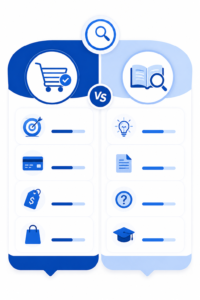
Different search intents require different content strategies
Types of Search Intent
Informational Intent
Users want to learn or understand something.
Examples include:
- What is website optimization?
- How does content strategy work?
Comparative Intent
Users compare:
- Services
- Tools
- Solutions
- Or providers
Purchase Intent
Users are close to making a decision.
Examples include:
- Best website optimization company
- Professional website design services
- Search optimization services
This type of intent often has the highest conversion potential.
How Search Intent Helps Increase Customers?
When content truly matches what users are searching for:
- Trust increases
- Engagement improves
- Conversion opportunities grow
- Visitors become more qualified
Strong websites organize content around:
- Different user needs
- Different decision stages
- Connected content structures
How to Better Understand Search Intent?
Businesses can better understand search intent by:
- Analyzing search keywords
- Studying ranking pages
- Reviewing common questions
- Monitoring visitor behavior
- Evaluating search result patterns
The Relationship Between Search Intent and Visibility
Search engines prioritize content that:
- Clearly answers questions
- Solves user problems
- Provides a strong experience
Understanding search intent helps websites:
- Improve rankings
- Increase qualified traffic
- Improve conversions
- Reduce bounce rates
Why Connected Content Matters?
Strong websites do not rely on isolated pages.
Instead, they build:
- Related articles
- Connected topics
- Structured internal linking
This helps search engines:
- Understand expertise
- Strengthen topic relevance
- Improve visibility
Understanding search intent has become one of the most important elements of modern search optimization.
Websites that create content matching:
- User needs
- Search behavior
- Decision-making stages
have stronger opportunities to:
- Increase visibility
- Attract customers
- Improve conversion performance
FAQ
Question 1
What is search intent?
Search intent is the real purpose behind a user’s search query and what they expect to find.
Question 2
Why is search intent important for SEO?
Understanding search intent helps businesses create content that better matches user needs, improving visibility and conversions.
Question 3
Can search intent improve conversion rates?
Yes. Content aligned with user intent attracts more qualified visitors and improves conversion opportunities.
Question 4
What are the main types of search intent?
The main types include informational intent, comparative intent, and purchase intent.
Related SEO Articles
Discover more articles about SEO strategies, search visibility, user behavior, and practical ways to attract more qualified customers through your website.