
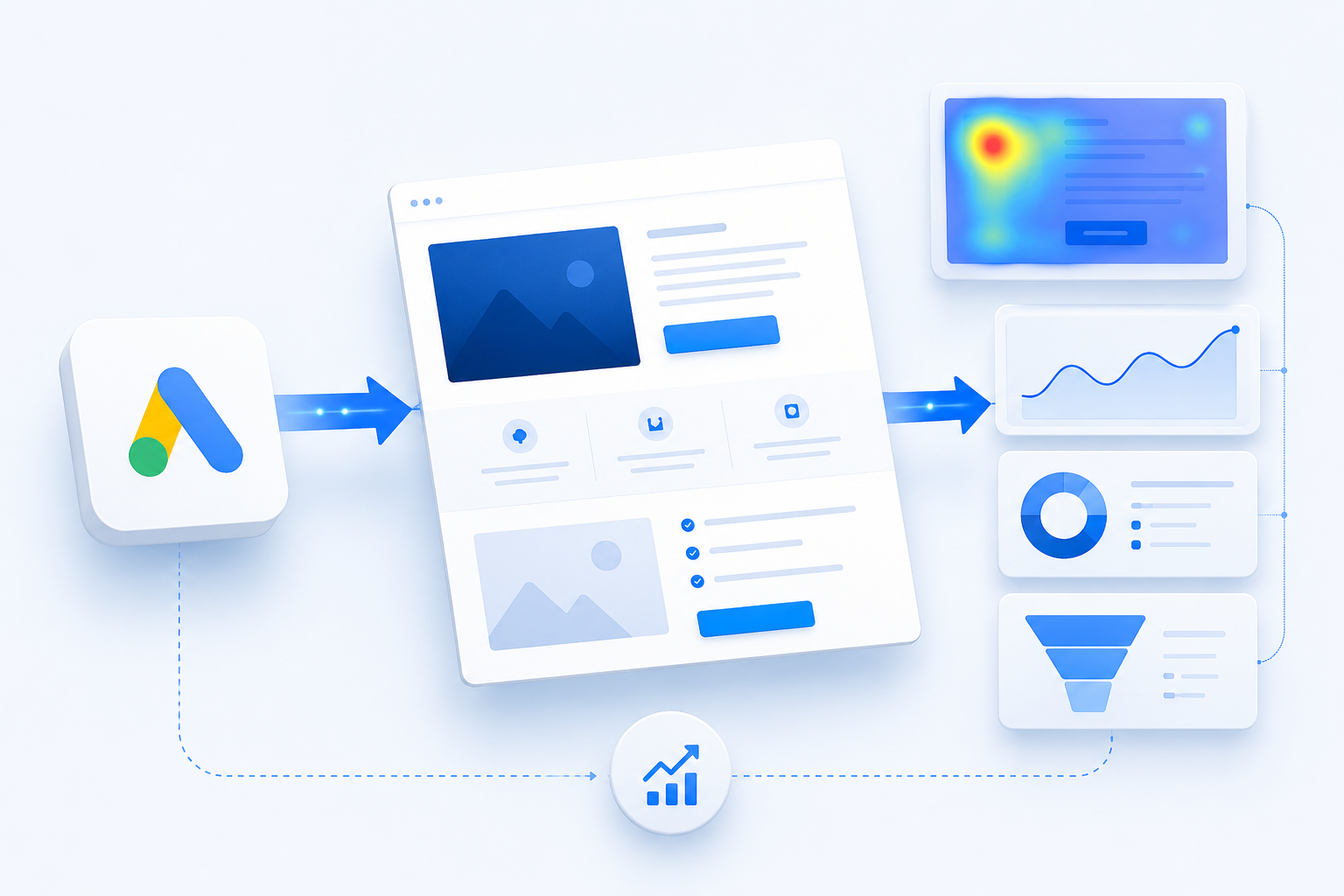
How User Experience Improves Google Ads Performance
Many businesses believe their advertising campaigns fail because of targeting or budget issues.
But often…
The real problem is the website itself.
A visitor clicks the ad, enters the website, and leaves within seconds without taking action.
No lead.
No inquiry.
No conversion.
Why?
Because poor user experience damages trust and interrupts the customer journey before conversion happens.
Slow pages.
Weak messaging.
Confusing layouts.
Poor CTA visibility.
Complicated navigation.
And this leads to:
- Higher advertising costs
- Lower conversion rates
- Reduced trust
- Lost customers
- Weak campaign performance
In this guide, you will learn how user experience directly affects Google Ads performance and how optimized websites can turn visitors into real customers.
Why User Experience Is Critical for Conversion?
User experience is not only about visual appearance.
It is about how visitors interact with your website and how easily they can move toward conversion.
Every second of delay… Every confusing section… Every unnecessary distraction…
Can increase bounce rates and reduce leads.
High-performing websites rely on:
- Fast loading speed
- Smooth navigation
- Clear messaging
- Strong trust signals
- Clear CTAs
- Optimized customer journeys
How User Experience Affects Google Ads Performance?
When users click your ads, their behavior on the landing page directly impacts campaign performance.
Google evaluates signals such as:
- Bounce rate
- Landing page quality
- Loading speed
- User engagement
- Conversion behavior
Better user experience can lead to:
- Higher Quality Score
- Lower cost per click
- Better ad rankings
- Higher conversion rates
Poor landing pages often result in:
- Increased advertising costs
- Lower campaign efficiency
- Reduced trust
- Faster visitor drop-offs
The Most Important UX Elements That Affect Conversion
1. Website Speed
Modern users expect websites to load instantly.
Especially on mobile devices.
Even small delays can dramatically increase bounce rates.
2. Clear Messaging
Visitors should instantly understand:
- What you offer
- Why they should trust you
- What action they should take
3. CTA Design
Your CTA should be:
- Visible
- Clear
- Easy to access
- Connected to buying intent
4. Trust Signals
Trust elements improve conversion rates significantly.
Examples include:
- Reviews
- Testimonials
- Case studies
- Social proof
- Business information
5. Mobile Experience
Most website traffic now comes from mobile devices.
Poor mobile optimization can seriously reduce conversions.
The Relationship Between UX and Conversion Optimization
User experience and conversion optimization work together.
The goal is not only generating traffic…
But converting visitors into:
- Leads
- Calls
- Customers
- Sales
Modern high-converting websites rely on:
- Heatmaps
- User behavior analysis
- Click tracking
- A/B testing
- Funnel optimization
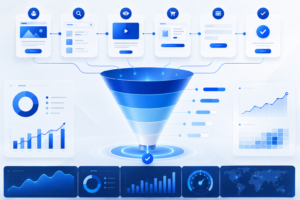
Optimized customer journeys improve conversion performance
What Makes a High-Converting Landing Page?
Successful landing pages usually include:
- Strong headlines
- Clear value propositions
- Visible CTAs
- Minimal distractions
- Trust signals
- Clean design
- Fast performance
- Full mobile responsiveness
Common UX Mistakes That Hurt Conversion Rates
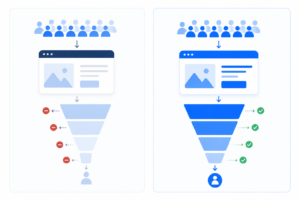
Poor user experience can cause businesses to lose customers despite high traffic
Common Problems:
- Slow loading pages
- Weak CTA visibility
- Outdated design
- Cluttered layouts
- Missing trust signals
- Weak content
- Long complicated forms
How Wide Helps Businesses Improve User Experience
At Wide Agency we build websites and landing pages designed to improve real marketing performance and increase conversions.
Our process includes:
- User behavior analysis
- Customer journey optimization
- UX-focused design
- Conversion optimization
- High-converting landing pages
- Marketing-focused website strategy
FAQ
Does user experience affect Google Ads performance?
Yes. User experience directly affects landing page quality, engagement, and conversion performance.
Why is website speed important?
Slow websites increase bounce rates and reduce conversion opportunities.
What is the difference between UX and CRO?
UX focuses on improving the customer journey, while CRO focuses on increasing conversion rates.
Are landing pages better than regular pages?
In many cases, yes. Landing pages are designed around specific conversion goals with fewer distractions.
Related Website Optimization Articles
Discover more articles about user experience, behavioral psychology, conversion optimization, and increasing customer conversions.