
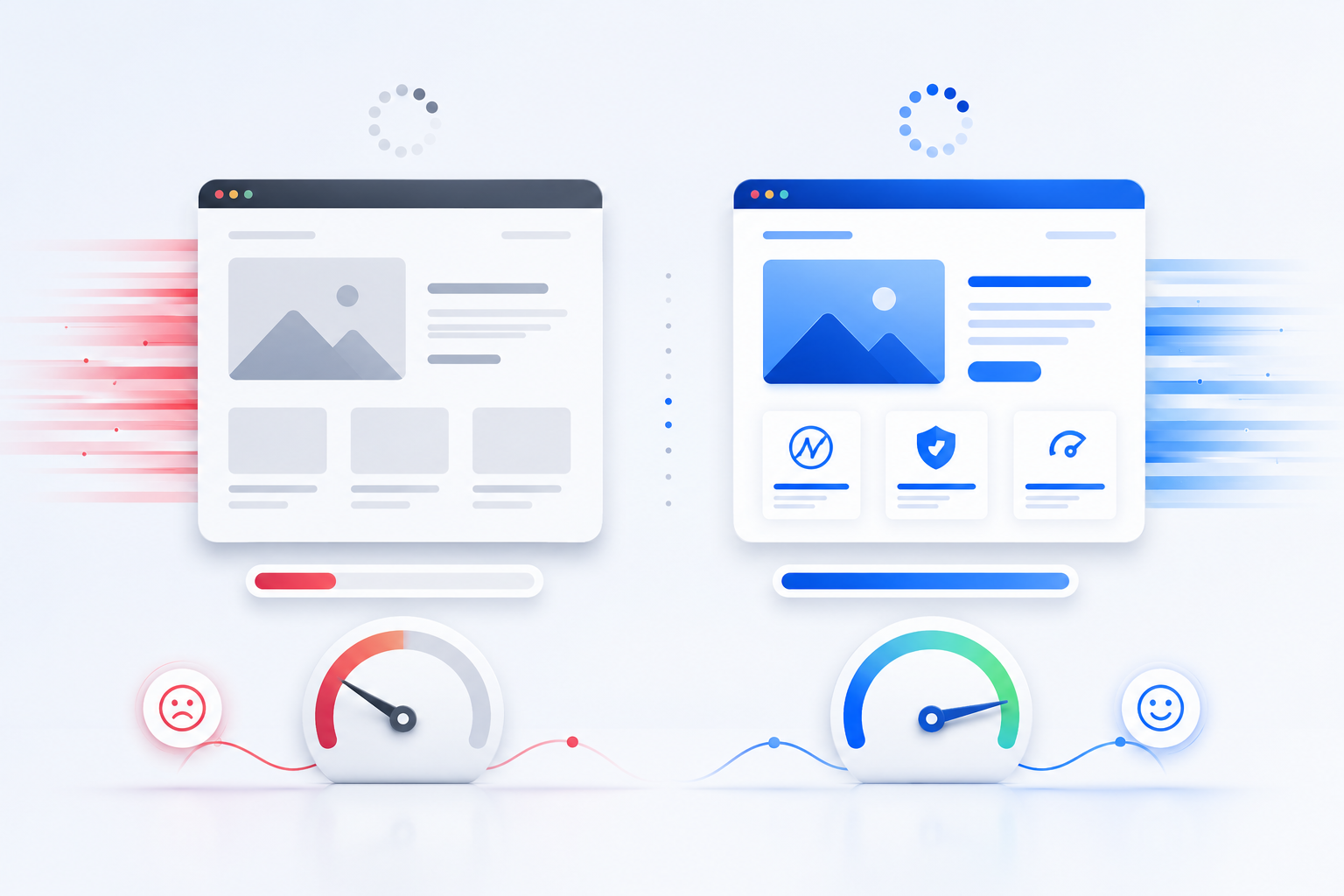
How Website Speed Affects Conversions and User Experience
Your website may look professional…
But if it loads slowly, you could be losing customers before they even see your content.
Modern users expect speed.
Especially on:
- Mobile devices
- Landing pages
- Advertising campaigns
- Service websites
Every second of delay can lead to:
- Higher bounce rates
- Lower conversions
- Reduced trust
- Lost leads
- Poor advertising performance
In many cases…
The issue is not your marketing campaign.
It is your website speed.
In this guide, you will discover how website speed directly affects user experience, conversion rates, and overall digital performance.
Why Website Speed Matters?
Website speed is no longer optional.
It is now a core part of user experience.
Users expect:
- Fast loading
- Smooth navigation
- Instant interaction
Even small delays can affect:
- First impressions
- Customer trust
- Session duration
- Conversion behavior
How Website Speed Affects User Experience?
Slow websites often create frustration.
Users may:
- Leave quickly
- Lose trust
- Avoid interaction
- Ignore CTAs
Fast websites create:
- Better engagement
- Smoother customer journeys
- Stronger trust
- Higher conversion potential
The Relationship Between Speed and Conversion Rates
Website speed directly impacts:
- Conversion rates
- Lead generation
- Customer acquisition
- Sales performance
Even minor loading delays can reduce conversions significantly.
Especially on:
- Landing pages
- Service pages
- Contact forms
- Paid traffic campaigns
Slow websites can reduce conversions even with high traffic
How Website Speed Affects Google Rankings?
Google considers speed an important factor for:
- Page experience
- Search rankings
- Landing page quality
- Advertising performance
Slow websites often experience:
- Poor rankings
- Higher bounce rates
- Lower Quality Scores
- Increased advertising costs
The Most Common Causes of Slow Websites
1. Unoptimized Images
Large image files are one of the biggest performance issues.
2. Too Many Plugins
Unnecessary plugins consume server resources and slow websites down.
3. Weak Hosting
Low-quality hosting directly affects website stability and speed.
4. Heavy Code
Many websites contain:
- Unused scripts
- Heavy files
- Excessive external requests
How to Improve Website Speed?
Key Optimization Steps:
- Compress images
- Reduce scripts
- Use caching
- Improve hosting
- Optimize code
- Improve mobile performance
- Reduce external requests
Performance optimization improves website speed and user experience
Why Speed Matters for Landing Pages?
Landing pages rely on:
- Fast attention
- Immediate interaction
- Minimal friction
Any delay can destroy conversion opportunities.
Especially in paid advertising campaigns.
How Wide Helps Businesses Improve Website Performance
At Wide Agency we build fast, optimized websites designed to improve user experience and increase conversions.
Our process focuses on:
- Speed optimization
- UX optimization
- Landing page performance
- Technical optimization
- Conversion-focused design
- Marketing performance improvements
FAQ
Does website speed affect conversions?
Yes. Website speed directly affects user behavior, engagement, and conversion rates.
Is website speed important for SEO?
Yes. Google considers speed part of overall page experience and ranking signals.
Why are mobile speeds important?
Most users browse websites on mobile devices, where speed expectations are even higher.
Do images affect website speed?
Yes. Large uncompressed images are one of the most common causes of slow websites.
FAQ
Does website speed affect conversions?
Yes. Website speed directly affects user behavior, engagement, and conversion rates.
Is website speed important for SEO?
Yes. Google considers speed part of overall page experience and ranking signals.
Why are mobile speeds important?
Most users browse websites on mobile devices, where speed expectations are even higher.
Do images affect website speed?
Yes. Large uncompressed images are one of the most common causes of slow websites.
Related Website Optimization Articles
Discover more articles about user experience, behavioral psychology, conversion optimization, and increasing customer conversions.