
Best Framework for Arabic Websites and SEO in 2026
Where Every Digital Journey Begins
In today’s digital landscape, most online journeys start with a search engine. Whether people are looking for information, comparing service providers, exploring products, or searching for local businesses, Google often becomes the first destination. As a result, appearing on the first page of search results is no longer a competitive advantage reserved for a few organizations. It has become a necessity for businesses seeking sustainable growth. This reality is especially relevant in Saudi Arabia and across the Arab region, where digital transformation continues to accelerate and more businesses compete for online visibility. To succeed in this environment, websites need to deliver:- Fast loading speeds,
- Excellent user experiences,
- Mobile-friendly interfaces,
- Strong support for Arabic content,
- And technical foundations that align with modern SEO standards.
Why Does Technology Choice Matter for Website Success?
Many organizations focus primarily on visual design or marketing campaigns. While both are important, the technical foundation of a website often determines whether those efforts can reach their full potential. A poorly optimized website may struggle with:- Slow page speeds,
- Difficult indexing,
- Poor mobile usability,
- Increased bounce rates,
- Reduced user engagement.
- Improve website performance,
- Enhance search engine accessibility,
- Deliver better user experiences,
- Support future growth,
- Minimize technical limitations.
What Does an Arabic Website Need to Perform Well?
Arabic websites often face unique challenges that extend beyond conventional development considerations. In addition to general SEO and performance requirements, organizations should prioritize factors specifically related to Arabic audiences.Proper Right-to-Left (RTL) Support
User interfaces should accommodate Arabic reading patterns naturally. Well-implemented RTL experiences improve usability and contribute to stronger engagement metrics.Optimized Typography and Performance
Arabic typography can significantly impact loading performance if implemented inefficiently. Choosing appropriate font-loading strategies helps preserve both aesthetics and speed.Search Engine Compatibility
Arabic content structures require careful planning to ensure that search engines can effectively understand and index pages. This includes attention to:- Heading structures,
- Internal linking practices,
- Metadata optimization,
- Semantic relevance.
Efficient Content Management
Businesses publishing content regularly need systems that simplify workflows while maintaining consistency across the website. A strong content management experience can contribute significantly to long-term SEO success.When Is Next.js the Right Choice?
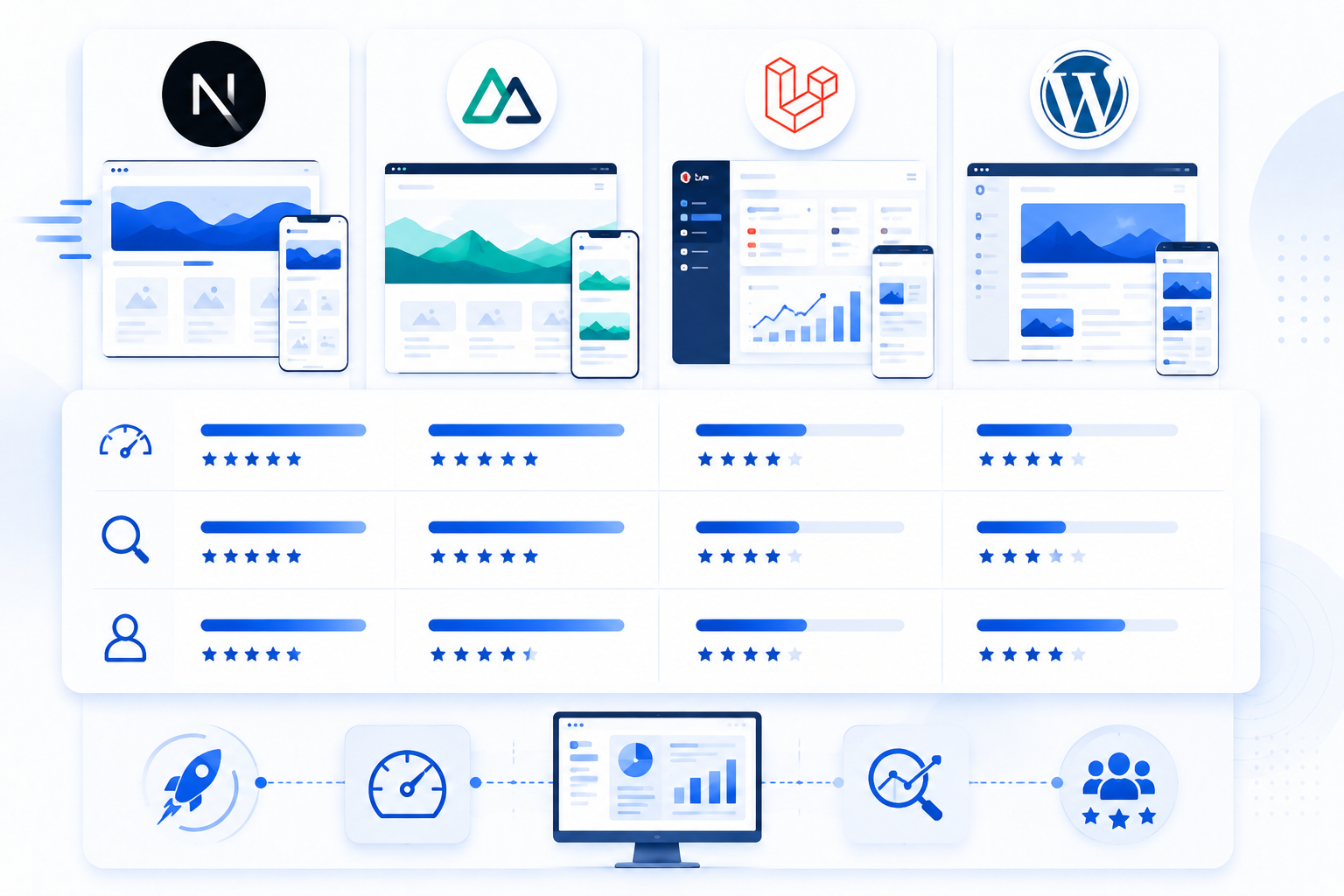
Next.js has become one of the most widely adopted frameworks for modern web development. Its popularity stems from its ability to combine flexibility, performance, and scalability within a single ecosystem. For Arabic businesses, Next.js can be particularly valuable when building:- Large e-commerce stores,
- Educational platforms,
- Enterprise websites,
- Service portals,
- High-growth digital products.
- Excellent performance capabilities,
- Support for SEO-friendly rendering strategies,
- Strong developer flexibility,
- Scalable architectures suitable for future expansion.
Is Technology Alone Enough for Strong SEO?
The simple answer is no. Modern frameworks can support technical SEO initiatives, but they do not automatically guarantee search visibility. Successful SEO requires a combination of factors working together, including:- High-quality content,
- Clear understanding of search intent,
- Effective internal linking,
- Positive user experiences,
- Technical optimization,
- Consistent authority-building efforts.
When Should You Choose Nuxt.js?
For businesses and development teams that prefer the Vue.js ecosystem, Nuxt.js offers an attractive balance between simplicity and performance. Nuxt.js extends Vue by introducing features that simplify application architecture and support SEO-friendly website experiences. It can be an excellent option for:- Corporate websites,
- Service-based businesses,
- Medium-sized content platforms,
- Marketing websites,
- Projects requiring fast development cycles.
- Improved developer experience,
- Strong support for search engine optimization,
- Flexible rendering options,
- Organized project structures that facilitate long-term maintenance.
When Do You Need Laravel?
Not every project revolves around content publishing. Some digital products require sophisticated business logic, advanced user interactions, and extensive database management capabilities. In these situations, Laravel often emerges as one of the strongest candidates. Laravel can be particularly suitable for projects involving:- Membership systems,
- Booking platforms,
- Custom dashboards,
- Complex workflows,
- Large-scale data management,
- Third-party integrations.
Is WordPress Still a Strong Option?
Despite the emergence of newer frameworks, WordPress continues to power a significant portion of websites worldwide. For Arabic content-driven businesses, WordPress remains one of the most practical and accessible solutions available. It is particularly well-suited for:- Blogs,
- News websites,
- Corporate websites,
- Educational portals,
- Small and medium-sized business websites.
- Ease of use,
- Extensive plugin ecosystems,
- Strong SEO capabilities,
- Broad developer availability,
- Lower barriers to entry.
- Reliable hosting environments,
- Regular maintenance practices,
- Performance optimization initiatives,
- Security best practices,
- Careful plugin selection.
Why Do Core Web Vitals Matter?
User experience has become increasingly important in modern website evaluation. Google introduced Core Web Vitals as a set of metrics designed to measure critical aspects of real-world website performance. These indicators focus primarily on three areas.Loading Performance
How quickly important content becomes visible to users. Fast-loading experiences help reduce abandonment rates and improve engagement.Interactivity
How quickly websites respond when users attempt to interact with elements on the page. Responsive experiences contribute positively to overall usability.Visual Stability
Whether page elements remain stable as content loads. Unexpected layout shifts can frustrate visitors and negatively influence user perceptions. Although technology selection may support better performance outcomes, Core Web Vitals are also influenced by:- Hosting quality,
- Development practices,
- Resource optimization strategies,
- Ongoing performance monitoring.
Core Web Vitals help measure the quality of user experience on modern websites.
How to Choose the Right Technology for Your Project
There is no universally superior framework suitable for every business. The most appropriate choice depends on a variety of factors.Project Complexity
Is the website primarily informational, or does it involve sophisticated functionality? Understanding the nature of the project provides clarity during the selection process.Business Objectives
Different goals often require different technological approaches. Organizations focused on publishing content may prioritize ease of management, while others may require greater flexibility and customization.Budget Considerations
Technology choices frequently influence both development costs and long-term operational requirements. Businesses should balance immediate needs against future scalability expectations.Growth Potential
Will the project remain relatively stable, or is substantial growth anticipated? Scalable architectures may become increasingly valuable over time.Internal Resources
The availability of internal expertise can also shape technology decisions. Selecting systems aligned with organizational capabilities often contributes to smoother operations and reduced complexity. Ultimately, choosing the right framework involves aligning technical possibilities with strategic business priorities.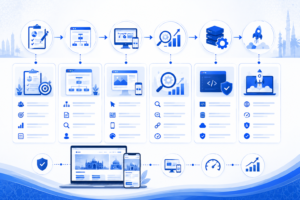
Successful Arabic websites require the right balance of technology, SEO, and user experience.
How WIDE Helps Businesses Build High-Performing Arabic Websites
At WIDE, we believe that successful websites are not defined solely by visual appeal. Instead, they are built upon a combination of strategic planning, technical excellence, user-centered design, and search visibility. Every business has different objectives. Some organizations require content-driven websites designed to educate audiences and generate leads. Others need sophisticated platforms capable of supporting advanced functionality, integrations, and operational workflows. For this reason, we avoid recommending a single technology stack for every project. Instead, our approach begins by understanding:- Business goals,
- Customer expectations,
- Technical requirements,
- Growth ambitions,
- Content management needs.
- Website strategy and planning,
- UX-focused interface design,
- SEO-friendly development practices,
- Performance optimization,
- Mobile-first implementation,
- Arabic localization considerations,
- Conversion-oriented user experiences,
- Ongoing technical consultation.
FAQ
What is the best framework for building an Arabic website?
There is no universal answer. The ideal framework depends on your project’s complexity, content requirements, scalability expectations, and business goals.Is WordPress still a good choice in 2026?
Yes. WordPress remains one of the strongest options for content-driven websites, particularly blogs, news platforms, and corporate websites that prioritize ease of management.Does server-side rendering improve SEO?
Server-side rendering can support search engine accessibility and user experience, especially for websites with dynamic content and large page volumes.Is Laravel suitable for Arabic businesses?
Absolutely. Laravel provides flexibility, localization capabilities, and powerful tools for building custom applications tailored to specific business requirements.Do Core Web Vitals affect website performance?
Core Web Vitals help evaluate important aspects of user experience, including loading speed, responsiveness, and visual stability, making them valuable indicators of website quality.Related Website Optimization Articles
Discover more articles about user experience, behavioral psychology, conversion optimization, and increasing customer conversions.
Why Company Websites Fail to Convert Visitors
How User Experience Affects Google Ads Performance
How Website Speed Affects Conversion Rates and User Experience
Why Ecommerce Stores Fail to Convert Visitors Despite High Traffic
How Heatmap Tools Analyze User Behavior and Improve Conversion Rates
How Users Read Content and Its Impact on UX and Conversion
How to Build Fast and Scale Sustainably Long Term
Why Customers Buy What Others Buy
How Visual and Behavioral Triggers Influence Customer Decisions
How Nudge Theory Influences Customer Decisions and Conversion
The Diderot Effect in E-Commerce and Its Impact on Sales Growth
What Is Metcalfe’s Law and How Does It Impact Digital Growth?
What Is a Perceptual Map and How Does It Help Businesses Understand Customers and Competitors?
Ecommerce in Saudi Arabia 2025: Growth, Statistics, Opportunities, and Challenges
Best Framework for Building an Arabic Website with Strong SEO in 2026
Modern Web Development Technologies in 2026: How to Build Faster and Smarter Websites
What Is Website Structure and How Does It Impact SEO and User Experience?
E-Commerce Product Marketing: How to Increase Sales With a Clear Strategy