
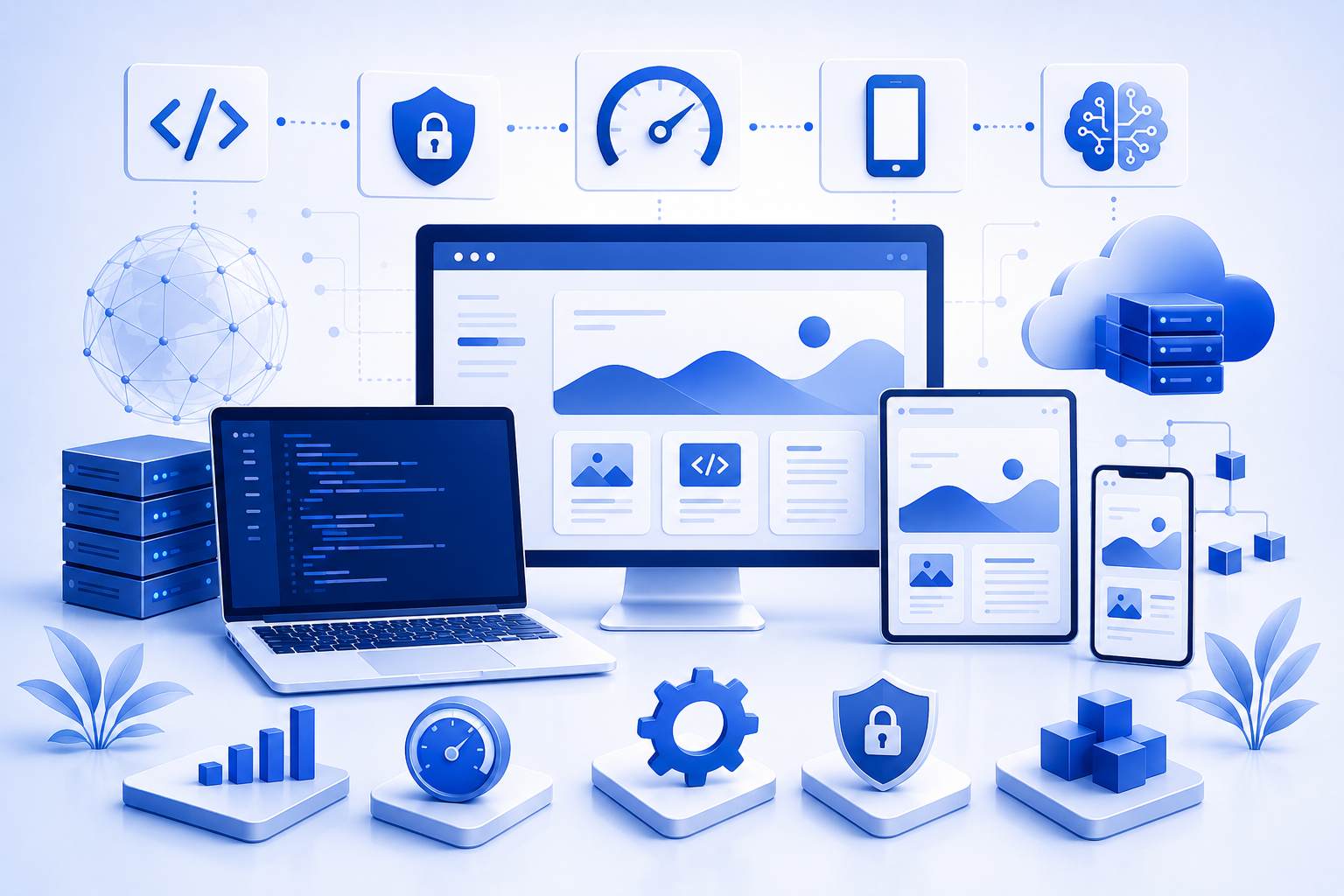
Modern Web Development Technologies for Faster Websites
The world of web development continues to evolve at a rapid pace. Websites are no longer judged only by how they look, but by how fast they load, how easily users can navigate them, how secure they are, and how effectively they support business goals. For many businesses, a website is now one of the most important digital assets they own. It can attract potential customers, build trust, support sales, and improve visibility in search engines. However, a website that is slow, outdated, or difficult to use can have the opposite effect. Modern web development in 2026 requires more than attractive design. It requires a strategic approach that combines performance, responsive design, user experience, security, scalability, and search engine optimization. Whether you are planning to build a new website or improve an existing one, understanding the latest web development technologies can help you make better decisions and avoid costly mistakes. In this guide, we explore the key technologies and practices shaping modern website development, and how businesses can use them to build faster, smarter, and more effective digital experiences.Why Have Web Development Standards Changed?
Web development standards have changed because user expectations have changed. People expect websites to load quickly, work smoothly on mobile devices, and provide clear information without unnecessary friction. Search engines have also become more focused on user experience. Factors such as website speed, mobile usability, page stability, and content accessibility all play an important role in how websites perform online. In addition, competition across digital channels has increased. Businesses can no longer rely on having a basic website. They need websites that support marketing, sales, customer service, and long-term brand credibility. As a result, modern website development now focuses on three major goals:- Improving performance and loading speed.
- Creating seamless user experiences across all devices.
- Building secure and scalable digital platforms.
Website Speed and User Experience
Website speed is one of the most important factors in digital performance. When users visit a website, they expect pages to load quickly and respond instantly to their actions. A slow website can lead to higher bounce rates, lower engagement, and fewer conversions. Even if the design looks professional, poor performance can damage the user’s first impression and reduce trust in the brand. Speed also affects how users move through the website. Faster pages make it easier for visitors to explore services, read content, complete forms, and take action. Common techniques used to improve website speed include:- Compressing images and using modern formats such as WebP.
- Enabling lazy loading for images and media files.
- Reducing unnecessary JavaScript and CSS files.
- Using content delivery networks to serve content faster.
- Applying caching strategies to reduce server load.
Monitoring website performance helps businesses improve user experience and conversions.
Mobile-First and Responsive Design
Mobile browsing continues to dominate digital behavior. For many users, the first interaction with a business happens through a smartphone. This makes responsive design essential for modern websites. A mobile-first approach means designing the website experience for smaller screens first, then expanding it for tablets, laptops, and desktop devices. This approach helps businesses create websites that are easier to use on mobile devices, where limited screen space and touch-based navigation require careful planning. Responsive design helps improve:- Usability across different screen sizes.
- Navigation on mobile devices.
- Readability of content.
- Form completion and lead generation.
- Consistency of brand experience.
Modern Front-End Frameworks
Front-end development has evolved significantly over the past decade. Today’s users expect websites to provide interactive experiences that feel fast, intuitive, and reliable. To meet these expectations, developers increasingly rely on modern JavaScript frameworks that simplify development processes while improving performance and maintainability. Among the most widely adopted technologies are React, Next.js, and Vue. These frameworks help teams build sophisticated user interfaces without sacrificing scalability or flexibility. Some of the key advantages of modern front-end frameworks include:- Reusable components that reduce development time.
- Improved maintainability for large projects.
- Enhanced user interactions and responsiveness.
- Support for scalable application architectures.
- More efficient collaboration between development teams.
The Evolution of HTML and CSS
Although new frameworks receive significant attention, HTML and CSS remain the foundation of every website. Modern CSS capabilities have dramatically expanded what developers can achieve without relying heavily on external libraries or complex workarounds. These advancements have contributed to faster, cleaner, and more maintainable websites. Important technologies used in modern front-end development include:- CSS Grid for advanced layout systems.
- Flexbox for responsive component alignment.
- CSS Variables for centralized design management.
- Animations and transitions for enhanced interactions.
- Media queries for adaptive experiences across devices.
How Caching Improves Website Performance
Caching plays a critical role in delivering fast and efficient websites. Rather than generating the same resources repeatedly, caching stores frequently accessed files and data so they can be delivered more quickly to users. This approach reduces server workload while improving loading times. Several types of caching strategies are commonly used:- Browser caching for storing static assets locally.
- Server-side caching to reduce database requests.
- Object caching to accelerate dynamic processes.
- Edge caching through content delivery networks.
The Role of AI in Web Development
Artificial intelligence is transforming how websites are planned, developed, and optimized. While AI does not replace developers and designers, it increasingly serves as a powerful tool that enhances efficiency and supports data-driven decision-making. AI technologies can assist with a variety of tasks throughout the development lifecycle. Examples include:- Analyzing user behavior patterns.
- Personalizing content recommendations.
- Supporting design ideation and prototyping.
- Improving testing and quality assurance workflows.
- Enhancing customer support through intelligent chat experiences.
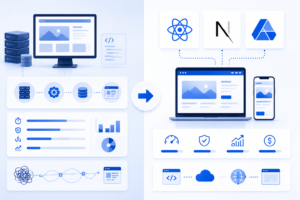
Choosing the right development framework supports scalability and long-term business growth.
Website Security Best Practices
As businesses become increasingly dependent on digital platforms, website security has evolved from a technical consideration into a business necessity. Cyber threats continue to grow in sophistication, targeting organizations of all sizes. A security incident can damage customer trust, disrupt operations, and result in significant financial and reputational consequences. For this reason, security should be integrated into every stage of the web development process rather than treated as an afterthought. Key website security practices include:- Implementing HTTPS to encrypt data exchanged between users and servers.
- Regularly updating content management systems, plugins, and dependencies.
- Using strong authentication mechanisms, including multi-factor authentication.
- Protecting against vulnerabilities such as cross-site scripting (XSS) and SQL injection attacks.
- Performing regular backups and disaster recovery planning.
- Monitoring website activity to identify unusual behavior and potential threats.
Is JAMstack the Future of Web Development?
JAMstack has emerged as one of the most discussed approaches in modern web development. The architecture combines JavaScript, APIs, and Markup to create websites that emphasize speed, security, and scalability. Unlike traditional server-dependent models, JAMstack relies heavily on pre-rendered content and distributed infrastructure to deliver exceptional performance. Organizations adopting JAMstack often benefit from:- Faster page delivery.
- Reduced server complexity.
- Improved security through fewer attack surfaces.
- Greater scalability during traffic spikes.
- More flexible deployment workflows.
Performance Testing and Optimization Tools
Continuous measurement is essential for maintaining a high-performing website. Without reliable data, businesses risk overlooking technical issues that may negatively impact user experience and conversion rates. Performance analysis tools provide valuable insights into areas requiring improvement while helping teams prioritize optimization efforts. Popular tools include:- Google PageSpeed Insights for evaluating page performance and identifying optimization opportunities.
- Lighthouse for assessing performance, accessibility, SEO, and development best practices.
- GTmetrix for monitoring loading behavior and diagnosing bottlenecks.
How Web Development Impacts SEO
Website development and search engine optimization are closely connected. Many of the technical decisions made during development influence how easily search engines can crawl, understand, and rank a website. A technically sound website provides a stronger foundation for long-term organic visibility. Important development considerations that support SEO include:- Fast loading speeds.
- Responsive experiences across devices.
- Logical content hierarchy and heading structures.
- Clean internal linking architecture.
- Implementation of structured data when appropriate.
- Reducing technical errors that hinder crawling and indexing.
Choosing the Right Technology for Your Business Website
No single technology is suitable for every business scenario. The ideal solution depends on factors such as organizational objectives, expected traffic volumes, content requirements, scalability needs, and available resources. Before selecting a development approach, businesses should consider questions such as:- What are the primary goals of the website?
- Will the website require advanced functionality in the future?
- How frequently will content need to be updated?
- What budget is available for development and maintenance?
- How important is long-term scalability?
FAQ
What are the latest web development technologies in 2026?
Modern web development increasingly relies on frameworks such as React and Next.js, performance optimization strategies, responsive design practices, and AI-assisted workflows.Does website speed affect SEO?
Yes. Website speed contributes to user experience and can influence how effectively websites perform in search environments.Why is responsive design important?
Responsive websites adapt to different screen sizes and devices, improving usability and helping businesses provide consistent experiences to their audiences.Is JAMstack suitable for all websites?
No. The suitability of JAMstack depends on project requirements, content complexity, and long-term operational needs.How can businesses choose the right web development technology?
Organizations should evaluate their objectives, technical requirements, growth expectations, and available resources before selecting a development approach.Related Website Optimization Articles
Discover more articles about user experience, behavioral psychology, conversion optimization, and increasing customer conversions.
Why Company Websites Fail to Convert Visitors
How User Experience Affects Google Ads Performance
How Website Speed Affects Conversion Rates and User Experience
Why Ecommerce Stores Fail to Convert Visitors Despite High Traffic
How Heatmap Tools Analyze User Behavior and Improve Conversion Rates
How Users Read Content and Its Impact on UX and Conversion
How to Build Fast and Scale Sustainably Long Term
Why Customers Buy What Others Buy
How Visual and Behavioral Triggers Influence Customer Decisions
How Nudge Theory Influences Customer Decisions and Conversion
The Diderot Effect in E-Commerce and Its Impact on Sales Growth
What Is Metcalfe’s Law and How Does It Impact Digital Growth?
What Is a Perceptual Map and How Does It Help Businesses Understand Customers and Competitors?
Ecommerce in Saudi Arabia 2025: Growth, Statistics, Opportunities, and Challenges
Best Framework for Building an Arabic Website with Strong SEO in 2026
Modern Web Development Technologies in 2026: How to Build Faster and Smarter Websites
What Is Website Structure and How Does It Impact SEO and User Experience?
E-Commerce Product Marketing: How to Increase Sales With a Clear Strategy